Overview
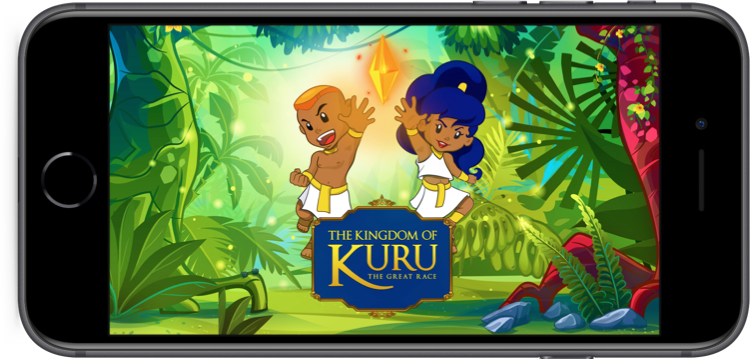
The Kingdom of Kuru was created to address two gaps we identified in the market
Problem:
- A lack of diverse main characters
- Kid-friendly, real-time multiplayer games that are easily available to the mass market
My Role:
I am the Cofounder of the game studio Brikym that created the Kingdom of Kuru. I wear many hats from designing game levels, creating characters, social media marketing, coordinating speaking efforts, animations, facilitating brainstorm sessions, and art directing illustrations.T
Creating The Kingdom of Kuru

We, Kym and I, built the Kingdom of Kuru from a small home studio. We work from a single long desk with multiple mac and pc devices within reach. Our shared goal is to recreate the feelings and the memorable moments we had growing up while competing with cousins and friends from playing classics such as Donkey Kong and Mario Kart and bring this to new generations on mobile.
Many multiplayer games for mobile are turn-based, so we started developing the game “Kingdom of Kuru”, where people could have fun and play together in real time.
Designing The Characters
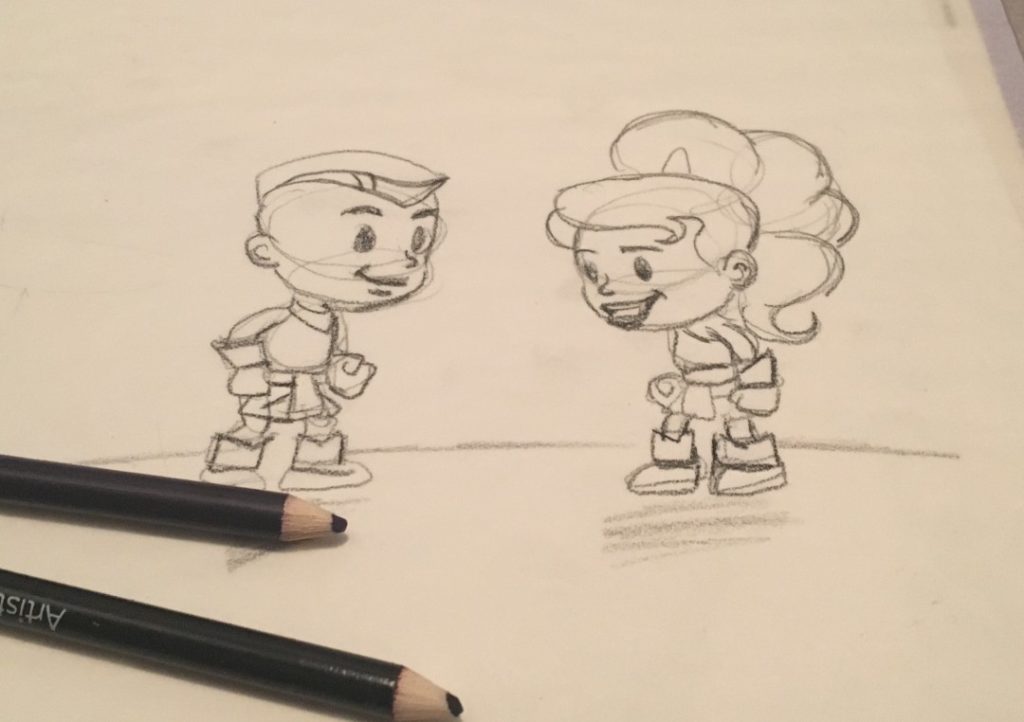
The overall features of all the characters including the villains were created from a strong influence and fascination of the Japanese miniaturization style called chibi. Chibi is a style of art where characters have larger heads and often used to depict child versions of characters. Despite Japanese influence, many of the main characters are African descent. Kiros looks like a fierce and strong character while Kara seems to be a little bit more rational but at the same time adventurous.


Kiros and Kara are the leading characters for the Kingdom of Kuru with the guidance of their adoptive father Tao Suon. They are fun-loving twins who are equal contenders to possess the throne and avenge their parents. Designing these characters was fun. As twins, I aimed to make them resemble yet easily distinguishable. Their attire is intentionally simple with future aspirations of making clothing upgradable through achievements.
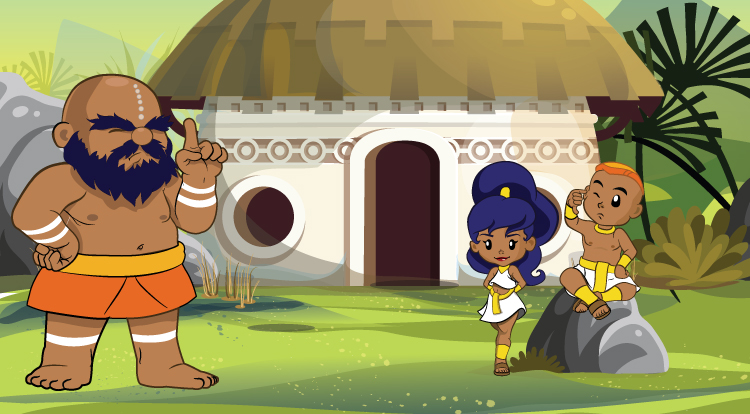
I designed their world with the aim for it to be foreign and beautiful. It is inspired by multiple civilizations in a way that’s not normally seen within the genre. I drew inspiration from India, Egypt, and the Dominican Republic to create this fantasy world.
To mix all these societies, it was important that all aspects of the game’s environment and characters felt related. We want this world to feel large with plenty of it’s own history and culture. For instance, tropical forest area resembles the forests of the Dominican Republic while the desert areas pull inspiration from Egypt by incorporating pyramids and writing that resembles hieroglyphics. The palace of Kuru was created after studying a mix of Arabic and Indian architecture.
Game Development
Kym owns the development of
Switching Game Development Engines
One of the most challenging aspects of creating this game is hands down the multiplayer feature. Adding real-time multiplayer into the game was one of the major reasons Kym moved development from Construct to the Unity platform. Once we made this transition, I took on more responsibility with learning Unity to place in the art assets and animations I created into U
First “Successful” Multiplayer Build:
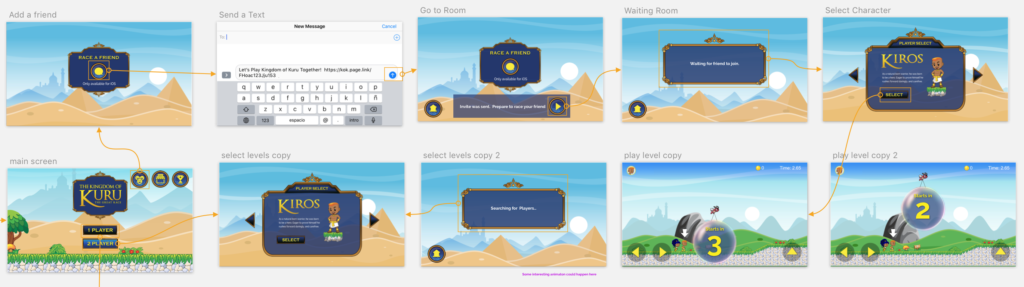
We were elated to reach this milestone with multiplayer despite the obvious bugs such as three players showing, lag, and inaccurate animations .
Player Testing
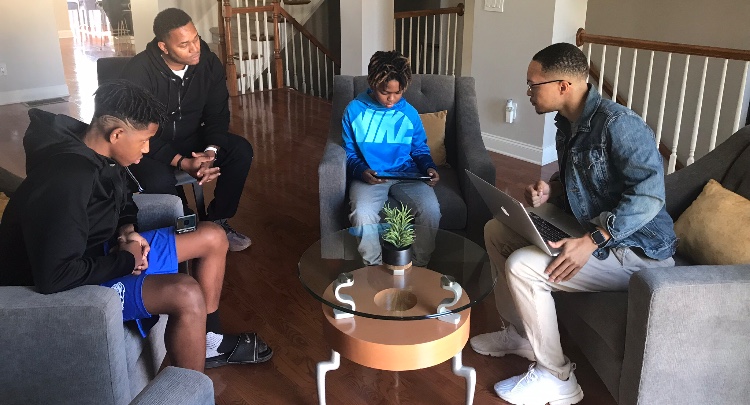
It was critical throughout the process to perform player testing and continuously collect feedback. We did this through surveys, in-person testing, and collecting casual feedback. We also incorporated analytics so we can continue to collect any issues. From testing, we collected great insights into what our intended users wanted and a gazillion of bugs to address.
A few collected insights:
- Players were intrigued by the idea of collecting gems every level
- People preferred to download a mobile app rather than play through a browser
- Casual players would repeatedly make the same mistakes while speeding through levels so controls needed to be simplified and levels needed to be redesigned to match the speed players desired to play.
Duration:
6 months for the first BETA version released on the web. 1.5 years for the BETA released on iOS. After each release, we continued to test and iterate.
Evaluation
Despite our progress with moving to iOS, adding new exciting features like multiplayer and positive feedback, we still were not seeing the sort of replay or influx of fans that we were hoping to obtain. We understood a big part of solving this would be us going to various places to speak about our project. I also learned about the Hooked model.
Incorporating the Hook Model:
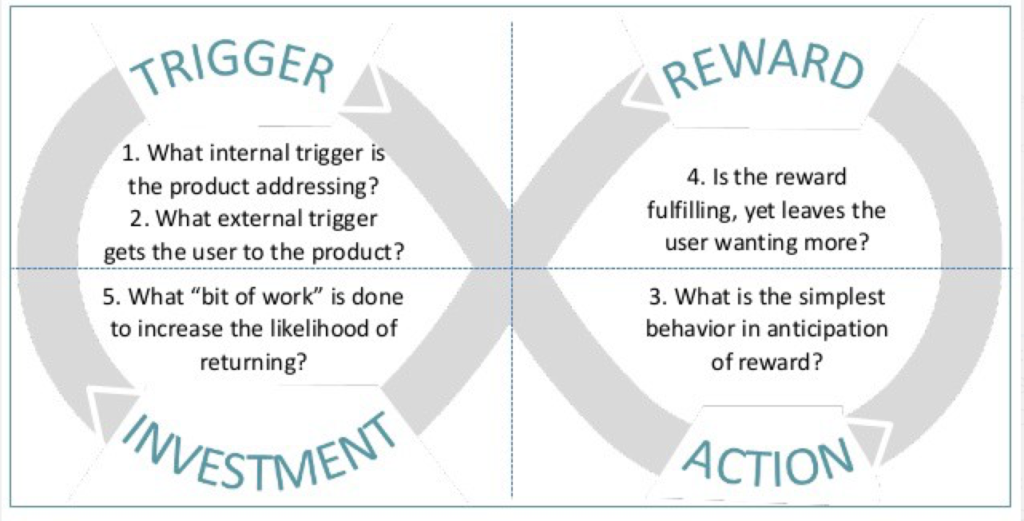
One day during lunch with colleagues I learned about the famous hook model. This model emphasized the importance of key principles that every good mobile product needs: Trigger, Action, Variable Reward, Investment
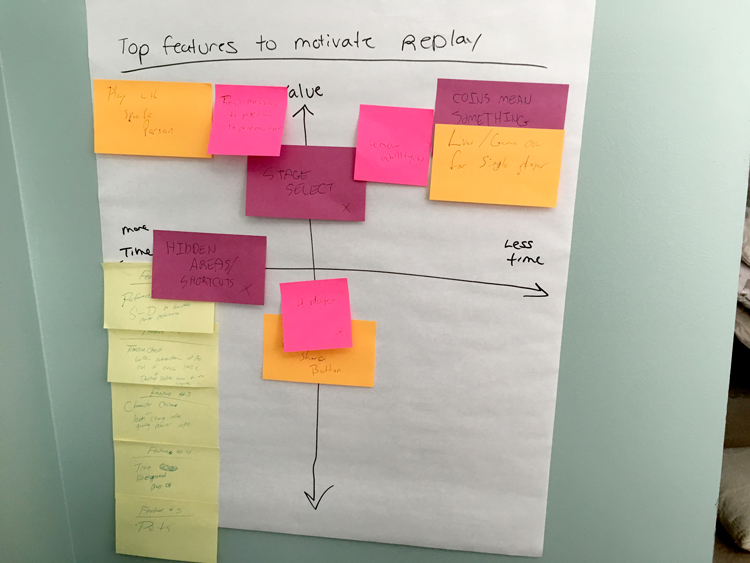
After reading this book, we began to incorporate these principles into our brainstorm sessions in conjunction with design thinking activities.